







Creation of robust Innovation Design Center “makerspace” gives students more 3D-printing resources
Aug 30, 2026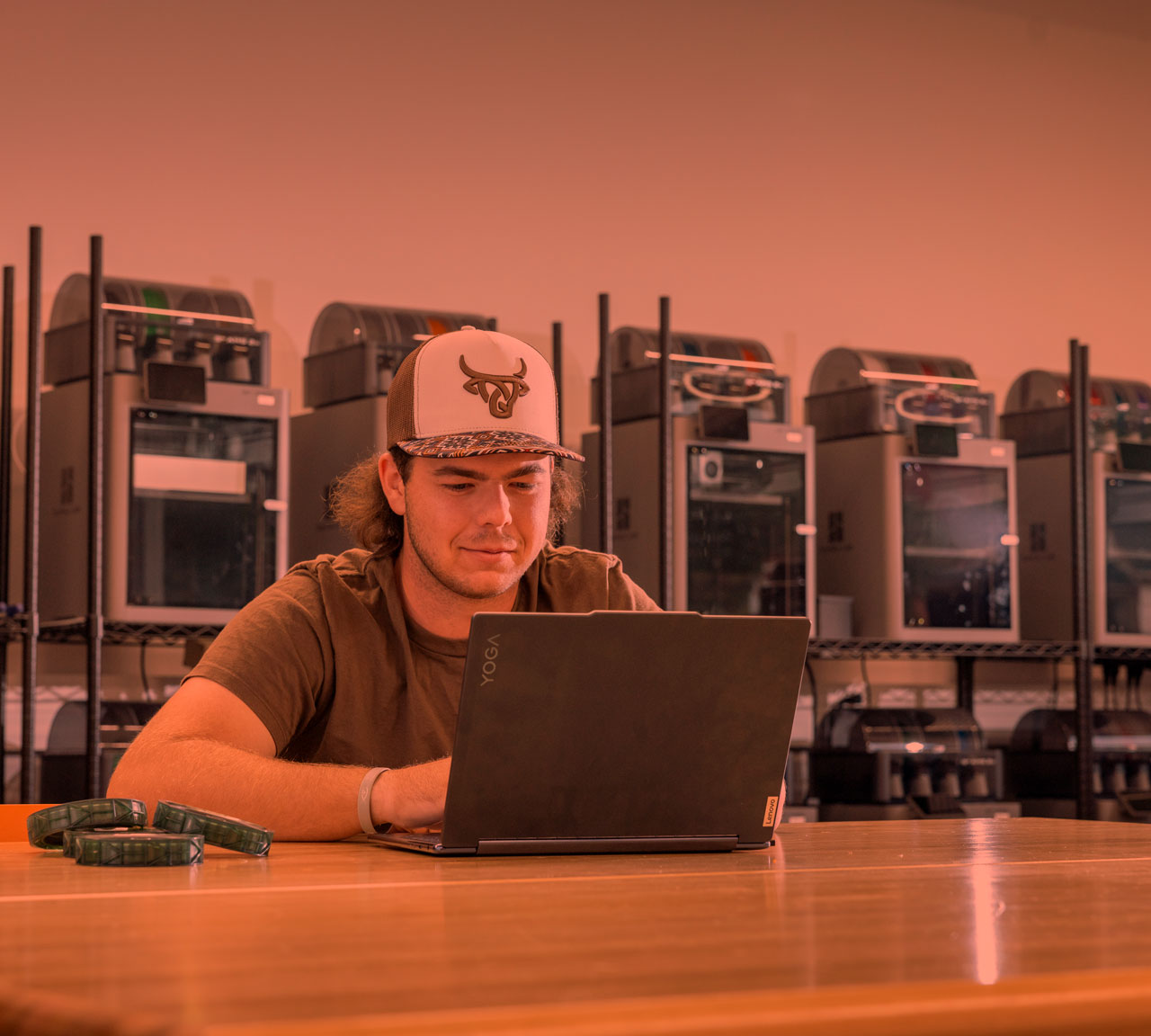
For years, Indiana Tech students using the Engineering Innovation Design Center have struggled with workflow bottlenecks as more students have taken on increasingly ambitious design projects.
Things are about to get much easier with the addition of 22 brand new 3D printers, which serve as the centerpiece of the lab’s new “makerspace.”
Now, more students will be able to access the equipment at once, making it far easier to incorporate 3D printing into coursework and class projects. Indiana Tech engineering technician and lab manager Anthony Mangold says staff will also benefit from this, as the new printers are “significantly more reliable, easier to use and require far less troubleshooting” than previous printers in the lab.
New features the printers bring to the lab include:
- Multi-material and multi-color printing (up to four materials/colors per print by default, with support for up to 16 when needed).
- AI-assisted print monitoring that can detect common failures, pause the print automatically, and notify the student.
- Multiple ways to submit print jobs, including Wi-Fi, USB, and direct computer connection.
- Built-in cameras that allow students to monitor prints remotely from their computer or phone and pause a job if necessary.
- The ability to cancel individual parts during large batch prints while allowing the remaining parts to continue.
- Automatic material detection that warns students if the loaded filament does not match their print settings.
“Overall, these changes should provide students with a more positive experience, reduce delays caused by equipment availability, improve project completion rates and allow my team to spend less time repairing equipment and more time supporting students and faculty,” said Mangold.
Indiana Tech faculty across all departments are also being encouraged to consider using the space for assignments, if applicable. Mangold added that simple print-based assignments give students valuable experience bridging the gap between a digital design and a manufactured part.