


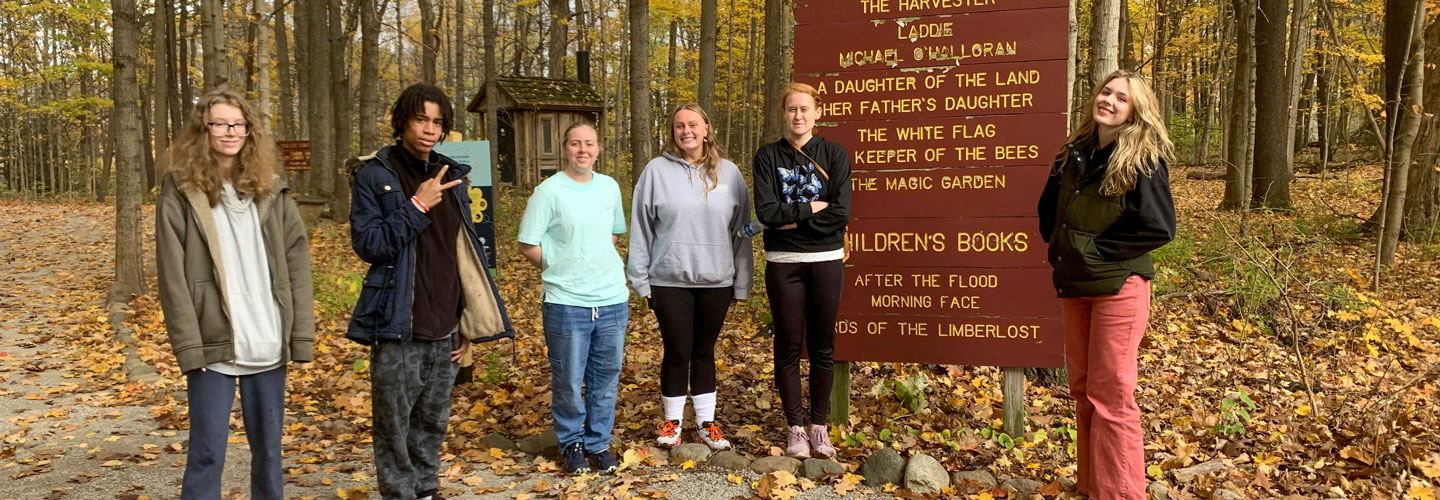
Students Use Works of Gene Stratton-Porter to Guide Class Nature Trips
November 17, 2026What can a student learn about environmental conservation by studying literature? Quite a bit, as Indiana Tech students discovered when they combined lessons from two classes to explore Northeast Indiana’s natural landscapes and see firsthand how restoration efforts can make a difference.
By bringing together College of Arts and Sciences classes Wildlife Ecology and Environmental Literature, students connected what they read and studied in the classroom with real-world conservation efforts inspired by the work of Indiana naturalist and author Gene Stratton-Porter.
Indiana Tech professors Dr. Suzanne Beyeler and Dr. Susan McGrade began working together on joint projects over the summer. Dr. Beyeler is an associate professor and program co-lead for biology, as well as the program lead for environment science. Dr. McGrade is a professor of English and humanities.
“Environmental science is interdisciplinary at its core. It draws on biology, chemistry and geology to explain how natural systems work, and it also draws on policy, economics, ethics, and the humanities to understand how people value, use, and affect those systems,” Dr. Beyeler said. “Plus, the problems we study involve both ecological processes and human decisions, so no single discipline can address them alone.”
“We knew that some of our students would be in both classes,” said Dr. McGrade. “Dr. Beyeler and I had a lot of fun thinking outside the box and exploring how we could bring our two disciplines together in a way that would give students a different perspective. It was gratifying to develop an experience that allowed them to take what they were learning in the classroom and apply it in a meaningful way.”
These collaborative efforts culminated in a “case study in nature writing,” which aims to pair written environmental works with the study of the natural landscapes that inspired them. They decided to set their students’ attention on Northeast Indiana nature writer and scientist Gene Stratton-Porter.
“Once we had decided to incorporate her, we wanted to integrate some experiential learning at her first home in Geneva, Indiana, the former home of the Limberlost Swamp, before it was deforested and drained for timber and oil. Then, we went to her second home at Sylvan Lake in Rome City, which she built once her beloved swamp and its natural inhabitants were gone,” she said.
The classes then went on two trips. The first was part of the Indiana Department of Natural Resources’ annual BioBlitz event in September, which just so happened to be taking place at Loblolly Marsh—wetlands previously connected to Limberlost Swamp, purchased by the DNR decades ago with restoration beginning in 1992.
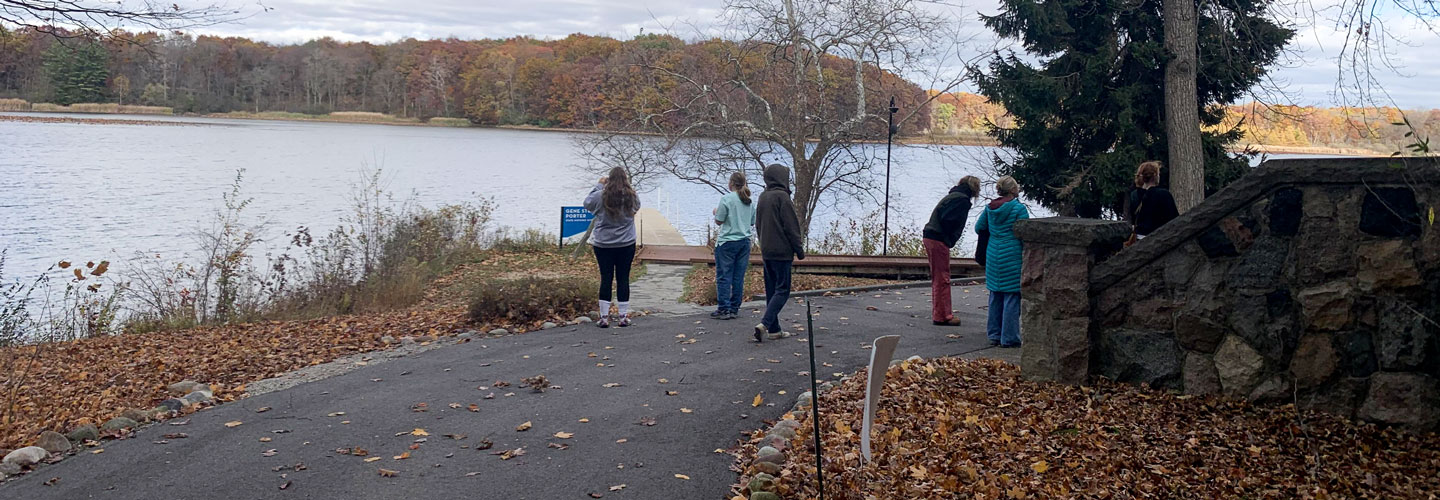
Students were broken up into groups that had specific areas of study, tracking species to be entered into a DNR database.
Indiana Tech senior biology student Alexandra Collins was tasked with observing flowering plants, while also looking at the lower levels of vegetation and plants. She says the trip taught her was a restored area is supposed to look like compared to an original wetland.
“There were traces of clovers, which show it was used for a farming field at one point,” Collins noted. “The fact that it was possible to rewild and make a change is amazing. By surveying and collecting data, we got to be an active part of that. Restoration and conservation is something that takes a whole lot of people and community to do.”
She says they used various programs, like nonprofit social media platform iNaturalist and bird identification app Merlin, to collect data and survey the land before taking the tour of Gene Stratton-Porter’s first home.
The second trip centered on her later work documenting the destruction and fights for land preservation, which took students to her Sylvan Lake home, where they foraged dinner.
Dr. Beyeler hopes that students developed an appreciation for how much stronger their understanding of environmental issues can be when drawn from more than one perspective, while bringing them in touch with the power they have in helping people think about nature beyond science.
“Gene Stratton-Porter grew up playing in and learning about nature just a short drive from our campus,” Dr. Beyeler said. “Her love of literature and science, paired together, is why she had such an impact on the world. I hope our students recognize that embracing a love for learning across all disciplines can release that same potential in themselves.”
This was all true for Collins.
She says the project helped her better understand the amount of work, time and people that go into restoration efforts, while affirming the various ways that a person can make a meaningful difference.
“You can be an advocate by writing books or articles, like I learned in my Environmental Literature class, or you can dedicate your time and knowledge to collect data like I learned in my Wildlife Ecology and Conservation class,” Collins said. “It also helped me to put what I have read and done in class into action and use. “